
In a move that signals a deeper and more dynamic phase of India–Russia cooperation, the Russian Education Agency has officially opened its New Delhi branch. The newly launched centre — a joint initiative between Synergy Corporation and Innopraktika.India — is designed to serve as a dedicated hub for educational exchange, student guidance, and long-term academic partnerships between the two countries.
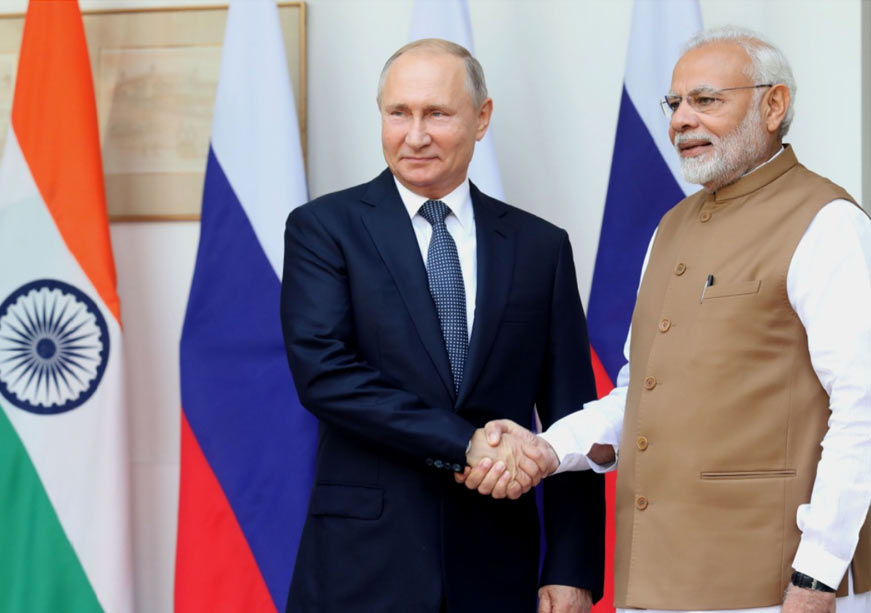
The opening comes at a symbolic moment, coinciding with the visit of Russian President Vladimir Putin to India. With both nations reaffirming their long-standing strategic ties, the establishment of this education-focused platform adds a fresh, people-centric dimension to bilateral cooperation.
A New Chapter in India–Russia Educational Ties
Vadim Lobov, President of Synergy Corporation, described the launch as an “important day” for both nations. He emphasised that the foundation of the new centre represents more than just an administrative milestone — it marks the beginning of expanded academic interaction, new collaboration channels, and renewed trust in educational exchange.
For decades, Indian students have considered Russia a valuable destination for higher education, especially in fields like medicine, engineering, and aerospace. With the new agency in place, students will now have access to structured information, smoother processes, and greater clarity about universities, courses, job opportunities, and skill pathways.
Lobov highlighted this exactly: the agency’s goal is to act as a “bridge” connecting students with Russian academic institutions. By offering a comprehensive information programme, the centre intends to help Indian students explore degrees, professional training, and long-term career prospects in Russia with transparency and support.
Why Russia Remains a Popular Choice for Indian Students
Over the years, thousands of Indian students have chosen Russia for higher education — especially those aiming for globally recognised medical degrees at affordable tuition. Beyond medicine, Russian universities also offer strong programmes in aviation, cybersecurity, nuclear engineering, robotics, literature, and classical arts.
However, navigating a foreign education system can feel overwhelming, especially when students rely on scattered information or third-party agents. This is where the newly launched agency steps in.
The Delhi branch is expected to provide:
- Authentic guidance straight from Russian institutions
- Details about courses, eligibility, and scholarships
- Support for documentation and application processes
- Information about living conditions and cultural adaptation
- Career pathways after graduation — in both countries
By centralising support, the agency aims to reduce confusion, prevent misinformation, and ensure students make well-informed decisions.
Russian Institutions Hope for Stronger Innovation Partnerships
Natalia Popova, First Deputy CEO of Innopraktika, expressed optimism that the centre will not just attract more students, but also strengthen the innovation ecosystems of both nations. She noted that Indian students who studied in Russia in the past have gone on to hold significant roles in science, technology, medicine, and creative industries.
According to her, future graduates — trained in Russia’s high-tech environment and connected with India’s growing innovation sector — could become crucial links between companies, research hubs, and emerging industries in both countries.
This vision reflects a broader trend in global education: students are no longer just learners; they are future collaborators, entrepreneurs, and innovators. The Delhi branch aims to nurture such global-ready talent.
A Sign of Growing Strategic Warmth
The inauguration of the Russian Education Agency happened just as President Vladimir Putin arrived in New Delhi for a high-level visit. Prime Minister Narendra Modi personally welcomed him at the airport, and the two leaders even shared a car ride to the PM’s residence — a gesture seen by many as a reflection of the warmth and trust between the nations.
Putin’s visit, his first to India in four years, includes the 23rd annual India–Russia bilateral summit, where education, technology, energy, defence, and cultural cooperation are expected to be key discussion points.
The opening of the education agency is widely viewed as a timely step, reinforcing people-to-people connections at a moment when both countries are deepening strategic engagement.
What the New Delhi Branch Means for Indian Students
For thousands of students dreaming of studying abroad, the new agency comes as a welcome development. It promises to:
- Make studying in Russia easier, safer, and more transparent
- Provide direct institutional support instead of relying on intermediaries
- Offer clear pathways for skill development and employability
- Highlight opportunities in Russia’s expanding tech and innovation sectors
With global education becoming more competitive and expensive, Russia stands out as a high-quality but affordable alternative. The Delhi branch is expected to guide students not only academically but also culturally — preparing them for life in a new environment.
A Growing Bridge for Future Generations
India and Russia have shared a long history of cooperation — from defence and diplomacy to science and culture. Now, education is emerging as the next major pillar of this partnership.
The new Russian Education Agency in New Delhi represents more than an office; it represents a growing bridge between young minds, universities, and future industries. It opens a doorway through which thousands of Indian students can explore world-class opportunities, and through which both countries can strengthen their innovation landscape.
As students, educators, and policymakers look ahead, this initiative stands as a reminder that strong international relationships are built not just through agreements, but through empowered youth, shared learning, and collaborative futures.
Also Read: https://thenewstudent.com/delhi-schools-reopen-amid-pollution-concerns/
https://www.freepressjournal.in/fpj-shorts