
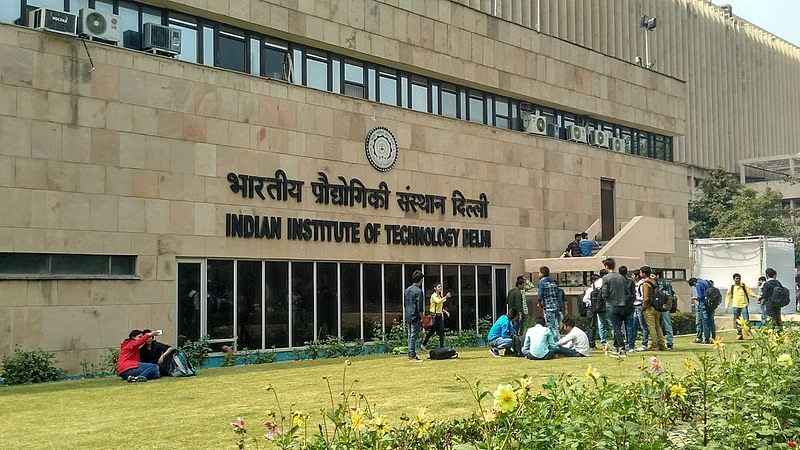
India’s development journey increasingly depends on the ideas, energy, and creativity of its youth—and this vision was on full display at the “Design for Bharat” Youth Innovation Challenge 2026, hosted at the Indian Institute of Technology (IIT) Delhi. The national-level challenge brought together young innovators from across the country, showcasing how student-led solutions can directly contribute to India’s long-term development goals.
Organised as part of the Viksit Bharat Young Leaders Dialogue, the initiative aimed to create a structured platform where students and young professionals could address real-world problems through innovation rooted in Indian realities. Rather than focusing on abstract or imported models, the challenge encouraged participants to design solutions that are practical, affordable, scalable, and locally relevant—qualities essential for meaningful impact in a diverse and developing country like India.
A National Platform for Youth-Led Solutions
The competition saw 19 shortlisted teams present their projects after a rigorous selection process. These teams represented a wide range of academic backgrounds and regions, reflecting the diversity of India’s innovation ecosystem. Their ideas spanned critical sectors such as healthcare, education, agriculture, urban infrastructure, sustainability, and digital inclusion—areas that are central to India’s socio-economic priorities.
Each project was designed with a strong focus on user needs and ground-level challenges. From improving access to essential services in underserved communities to developing low-cost technological tools for efficiency and inclusion, the solutions highlighted how innovation can be both impactful and inclusive.
The emphasis on context-specific problem-solving distinguished the challenge from conventional innovation competitions. Participants were encouraged to understand social, economic, and cultural constraints before proposing solutions, reinforcing the idea that successful innovation must be rooted in lived realities.
Promoting Frugal and Indigenous Innovation
A key theme of the “Design for Bharat” challenge was frugal innovation—the ability to achieve more with fewer resources. This approach is particularly relevant for India, where scale, affordability, and adaptability often determine whether an idea succeeds or fails.
Rather than high-cost, technology-heavy models, many teams focused on simple yet effective designs that could be easily adopted across regions. This reflected a growing recognition that innovation does not always require cutting-edge technology; sometimes, it requires thoughtful design, empathy, and a deep understanding of user behaviour.
By prioritising indigenous solutions, the challenge aligned closely with India’s broader push towards self-reliance and technological independence, while still remaining open to global best practices.
Bridging Academia and Society
One of the most significant aspects of the initiative was its focus on bridging the gap between academic learning and societal needs. Participants were guided through the process of design thinking, critical analysis, and interdisciplinary collaboration—skills that are increasingly essential in today’s complex problem-solving environments.
Teams received mentorship from experts across academia, industry, and the public sector, enabling them to refine their ideas and move from conceptual thinking to functional prototypes. This mentorship-driven approach ensured that innovation was not limited to ideation but extended towards practical implementation.
By engaging directly with real-world challenges, students were encouraged to move beyond textbook knowledge and apply their skills in ways that could deliver tangible public value.
Youth as Partners in Nation-Building
The “Design for Bharat” Youth Innovation Challenge reflects a broader shift in how youth participation is viewed in India’s development process. Rather than being passive beneficiaries of policy, young people are increasingly being positioned as active partners in nation-building.
Under the Viksit Bharat framework, the government has emphasised the importance of nurturing leadership, innovation, and problem-solving capabilities among the youth. Platforms like this challenge serve as incubators for future policymakers, entrepreneurs, and social innovators who can contribute to inclusive and sustainable growth.
By aligning innovation with national priorities, the initiative helps ensure that creative talent is channelled towards areas where it is most needed—strengthening public welfare while fostering a sense of civic responsibility among participants.
Strengthening India’s Innovation Ecosystem
Beyond individual projects, the challenge highlights the importance of building structured innovation ecosystems that support young talent. Competitions like “Design for Bharat” provide not just recognition, but also exposure, mentorship, and institutional support—elements that are critical for translating ideas into impact.
Such platforms encourage collaboration across disciplines and sectors, breaking silos that often limit innovation. They also help identify scalable solutions that can be further developed through partnerships with government agencies, startups, or social organisations.
In the long run, initiatives like this contribute to strengthening India’s overall innovation capacity, ensuring that growth is driven not only by technology but also by social insight and design excellence.
Looking Ahead
As India works towards ambitious development goals, the role of youth-led innovation will only become more significant. The success of the “Design for Bharat” Youth Innovation Challenge at IIT Delhi demonstrates that when young minds are given the right platform, guidance, and purpose, they can offer powerful solutions to complex national challenges.
By fostering creativity, entrepreneurship, and problem-solving skills, the initiative reinforces the idea that India’s future will be shaped not just by policy decisions, but by the ideas and innovations of its youth.
Also Read: https://thenewstudent.com/ctet-february-2026-exam-date-registration/
https://www.indiatoday.in/education-today/notification/story/when-will-the-cat-2025-answer-key-and-response-sheet-be-released-2830485-2025-12-04