
In a significant step towards strengthening India’s linguistic and cultural unity, schools and colleges in Varanasi are preparing to introduce regular Tamil language classes under the framework of the Kashi Tamil Sangamam initiative. The move aims to deepen educational and cultural ties between Uttar Pradesh and Tamil Nadu, transforming classrooms into spaces of cross-cultural learning and national integration.
The initiative at Varanasi draws inspiration from Prime Minister Narendra Modi’s vision of fostering unity through language exchange, a theme repeatedly highlighted through the Kashi Tamil Sangamam—a flagship programme celebrating the centuries-old civilisational links between Kashi and Tamil Nadu.
From Inspiration to Implementation
The idea gained widespread attention after Prime Minister Modi, during his December 28 episode of Mann Ki Baat, praised Payal Patel, a student of Government Queen’s College, Varanasi, for learning basic Tamil in a short span of time. Her achievement resonated nationally, symbolising the curiosity and openness of young learners towards India’s diverse linguistic heritage.
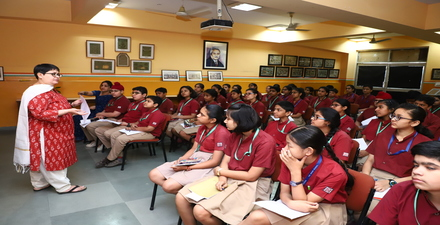
Following the Prime Minister’s remarks, the district inspector of schools issued directions to Government Queen’s College to begin daily evening Tamil language classes. College principal Sumit Kumar confirmed that preparations are already underway and that the institution is committed to making the programme accessible and engaging for students.
Academic Collaboration and Digital Learning
To ensure quality instruction, Government Queen’s College has partnered with Sandhya Kumar Sai, a Tamil language instructor from Tamil Nadu who previously taught Payal Patel. The classes will initially be conducted online, allowing students in Varanasi to learn directly from a native Tamil educator.
Further strengthening the academic foundation of the initiative, the Head of the Tamil Department at Banaras Hindu University (BHU) has assured full institutional and academic support. This collaboration is expected to provide structured learning material, guidance for teachers, and continuity for students who wish to pursue Tamil beyond introductory levels.
A Two-Way Cultural Exchange
Officials emphasised that the programme is not a one-sided effort. As part of a reciprocal exchange, around 50 teachers from Varanasi are expected to travel to Tamil Nadu to teach Hindi. This two-way movement of educators reflects the broader goal of linguistic harmony—encouraging mutual respect and understanding between regions.
The proposal has been discussed in administrative meetings chaired by the Varanasi commissioner and district magistrate, indicating strong institutional backing for the initiative.
Student Enthusiasm and Cultural Expression
Student response has been overwhelmingly positive. Recently, students from Government Queen’s College sent New Year greetings in Tamil to Prime Minister Modi and Uttar Pradesh Chief Minister Yogi Adityanath, demonstrating both enthusiasm and confidence in their newly acquired language skills.
Celebrations included rangoli designs, dance performances, and cultural presentations set to Tamil music, highlighting how language learning has extended beyond textbooks into creative expression.
Another institution, Harish Chandra Girls Inter College, has also embraced the initiative. Principal Priyanka Tiwari noted that a 15-day Tamil language programme was conducted during the Kashi Tamil Sangamam, benefiting nearly 50 students. Encouraged by the response, the college is now considering launching a formal Tamil course from the next academic session.
Education as a Bridge Between Cultures
The Kashi Tamil Sangamam at Varanasi goes beyond language instruction. Through academic seminars, literary interactions, cultural performances, and workshops, the programme seeks to revive and celebrate the historic links between northern and southern India. By embedding these exchanges within educational institutions, the initiative ensures that cultural dialogue begins early and grows organically among students.
Education officials believe that learning each other’s languages will not only improve communication but also foster empathy, national unity, and a deeper appreciation of India’s pluralistic identity.
A Step Toward Linguistic Unity at Varanasi
With Tamil classes beginning in Varanasi and Hindi teachers preparing to travel south, the initiative marks a meaningful step toward bridging linguistic diversity. It reflects a broader shift in Indian education—one that values cultural literacy alongside academic excellence.
As classrooms in Kashi open their doors to Tamil, they also open pathways to understanding, shared heritage, and a stronger sense of national belonging.
Also Read: https://educationpost.in/news/technology/googles-475-billion-power-play-securing-ais-backbone-with-intersect-acquisition
https://thenewstudent.com/iim-nagpur-digital-strategy-marketing-analytics/