
India has taken a significant step toward future-ready education with the launch of the National AI Literacy Programme (YUVA AI), aimed at introducing artificial intelligence concepts to school students at an early stage. The initiative reflects the government’s growing recognition that digital skills, particularly AI literacy, are no longer optional but essential for navigating the modern world.
Designed to familiarise young learners with emerging technologies such as artificial intelligence, machine learning, and data-driven decision-making, the programme seeks to prepare India’s future workforce while encouraging the ethical and responsible use of technology. The initiative aligns closely with national priorities under Digital India, the National Education Policy (NEP) 2020, and India’s broader ambition to become a global technology and innovation leader.
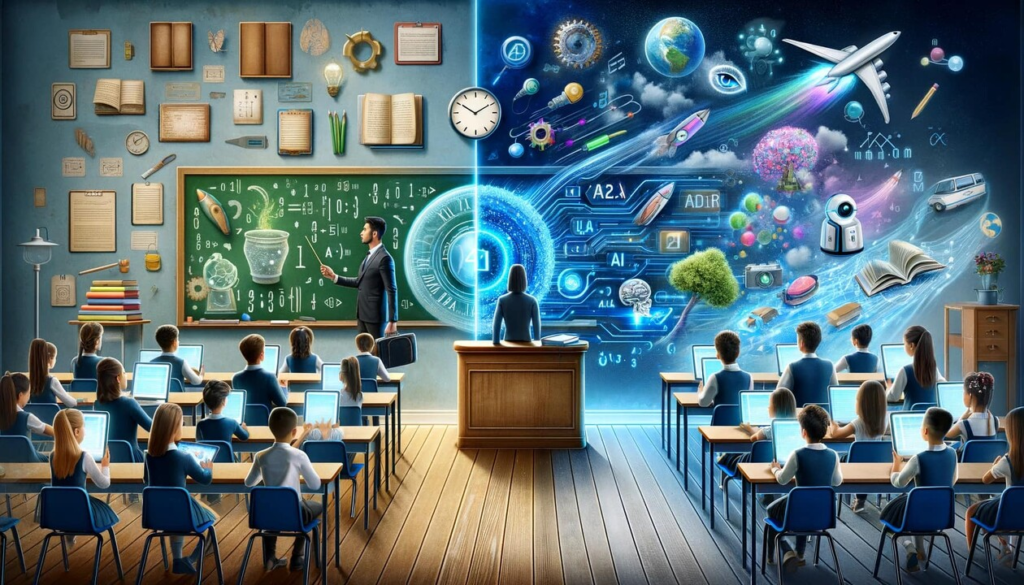
Building AI Awareness from the Classroom
The YUVA AI programme focuses on age-appropriate, foundational learning, ensuring that students are not overwhelmed by technical complexity. Instead of teaching advanced coding or algorithms at an early stage, the curriculum introduces AI as a concept students already encounter in daily life—through smartphones, recommendation systems, digital assistants, online learning platforms, and smart devices.
By connecting classroom learning to real-world experiences, the programme aims to make technology more relatable and less intimidating. Students are encouraged to think critically about how AI systems function, where they are used, and how they influence decision-making in society.
Experiential Learning over Rote Memorisation
A key feature of the National AI Literacy Programme is its emphasis on experiential and inquiry-based learning, in line with NEP 2020’s push to move beyond rote education. Instead of memorising definitions, students will engage in problem-solving activities, logical reasoning exercises, and computational thinking tasks.
Practical examples will help students understand how AI is applied across sectors such as healthcare, agriculture, education, governance, climate management, and smart cities. This approach allows learners to appreciate the societal relevance of technology and sparks curiosity about how innovation can address real challenges.
Inclusivity and Digital Equity
One of the programme’s most important goals is digital inclusion. The government aims to ensure that AI literacy is not restricted to elite or urban schools but reaches government schools, rural regions, and underrepresented communities.
Through online platforms, digital learning tools, and partnerships with educational institutions and technology organisations, the initiative seeks to reduce disparities in access to emerging technologies. This inclusive framework recognises that India’s demographic strength lies in its diversity, and empowering students across socio-economic backgrounds is essential for sustainable growth.
Ethical and Responsible AI Education
Beyond technical awareness, YUVA AI places strong emphasis on ethical AI education. Students will be sensitised to critical issues such as data privacy, algorithmic bias, misinformation, surveillance concerns, and responsible innovation.
Introducing ethical discussions at the school level helps shape informed digital citizens who understand not only what technology can do, but also what it should and should not do. This early exposure is expected to foster accountability, critical thinking, and respect for democratic and human values in an increasingly data-driven society.
Strengthening India’s Human Capital
From an economic and strategic perspective, the programme is a long-term investment in human capital development. As AI continues to reshape industries and labour markets, early familiarity with digital concepts can improve adaptability, creativity, and problem-solving abilities among future workers.
By creating awareness at the school level, India is building a pipeline of talent that can support its growing AI ecosystem, including startups, research institutions, public-sector innovation, and advanced manufacturing. This foundation is particularly crucial as the country positions itself as a hub for technology-led growth.
Challenges in Implementation
While the National AI Literacy Programme holds promise, its success will depend on effective implementation. Teacher training remains a key challenge, as educators will need support to confidently deliver AI-related content. Integrating new modules into existing curricula without overburdening students and teachers will also require careful planning.
Additionally, infrastructure gaps in remote and underserved regions, including access to reliable internet and digital devices, could limit reach unless addressed through coordinated policy efforts. Continuous updating of learning content will be necessary to keep pace with the rapidly evolving nature of AI technologies.
A Strategic Step Toward the Future
Despite these challenges, the launch of the National AI Literacy Programme represents a forward-looking shift in India’s education strategy. By embedding AI awareness early in the learning journey, the country is not only preparing students for future careers but also nurturing informed citizens capable of engaging thoughtfully with technology.
As India seeks to balance innovation with inclusion and ethics, initiatives like YUVA AI signal a commitment to shaping a generation that understands technology as a tool for progress, responsibility, and societal good.
Also Read: https://thenewstudent.com/national-task-force-student-wellbeing/
https://educationpost.in/news/education/panjab-university-delays-exams-as-student-protest-over-senate-polls-intensifies