
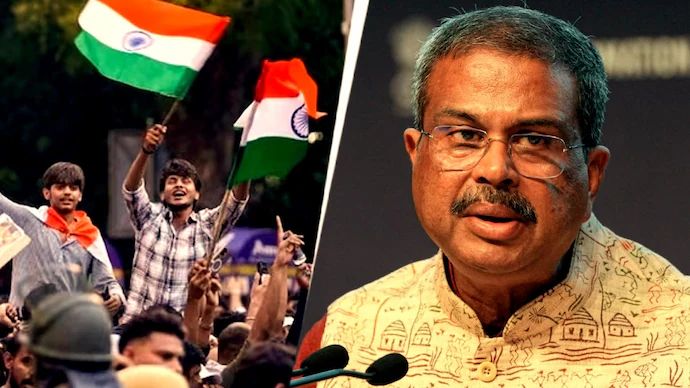
NEET-UG 2026 Controversy Leads to Major Political Development
The NEET-UG 2026 controversy has emerged as one of the most significant developments in India’s education sector this year. What began as allegations of a paper leak during the country’s largest medical entrance examination soon evolved into a nationwide movement demanding transparency, accountability, and stronger safeguards for competitive exams. The controversy eventually culminated in the resignation of Union Education Minister Dharmendra Pradhan, marking a major political development and triggering renewed discussions on education reforms.
Paper Leak Allegations Spark Public Outrage
The controversy began shortly after the NEET-UG 2026 examination, when allegations surfaced that parts of the question paper had been leaked before the test. As these claims spread, thousands of students and parents questioned the fairness of the examination process and sought a detailed investigation.
The issue quickly gained national attention, with students expressing concerns that any compromise in examination security could affect the future of millions of aspirants competing for limited medical seats. Investigating agencies launched inquiries while education authorities assured candidates that the matter would be thoroughly examined.
Student Protests Grow Across India
As investigations continued, demonstrations began taking place across several cities. Student organisations, medical aspirants, and youth groups demanded greater transparency in the conduct of national entrance examinations and stronger action against those responsible for alleged irregularities.
The protests gradually expanded beyond the paper leak allegations and developed into a larger discussion about examination governance, institutional accountability, and the need to strengthen the country’s testing system. Educational institutions, civil society organisations, and political leaders also joined the debate, increasing pressure on the government to respond.
Government Announces Examination Reforms
In response to the growing public concern, the government introduced a series of reforms aimed at improving the functioning of the National Testing Agency (NTA). Authorities initiated organisational restructuring, strengthened examination security measures, expanded digital monitoring, and announced the recruitment of experts in technology, investigation, and digital forensics to improve examination administration.
Officials stated that these reforms were intended to restore public confidence in the examination system and reduce the possibility of similar incidents in the future. The government also reiterated its commitment to ensuring that national entrance examinations remain fair, transparent, and secure.
Political Pressure Intensifies
As the controversy continued, political attention around the issue increased significantly. The matter was raised repeatedly in Parliament, while opposition parties demanded accountability from the Ministry of Education. The sustained protests and widespread media coverage kept examination reforms at the centre of public discussion.
Education experts argued that while immediate investigations were necessary, lasting improvements would require structural reforms, stronger institutional oversight, and better coordination between agencies responsible for conducting national-level examinations.
Dharmendra Pradhan Steps Down
Following weeks of protests and mounting political pressure, Union Education Minister Dharmendra Pradhan resigned from his position. His resignation marked one of the most significant outcomes of the NEET-UG 2026 controversy and reflected the seriousness of the concerns raised by students and other stakeholders.
The government has maintained that efforts to strengthen the examination system will continue despite the leadership change. Officials have emphasised that institutional reforms and improved governance remain key priorities for restoring trust among students.
What This Means for Students
For students preparing for upcoming entrance examinations, the resignation does not alter existing admission procedures or examination schedules. However, it signals a renewed focus on improving the integrity of India’s examination system.
Experts believe the coming months will see greater emphasis on examination security, digital surveillance, institutional accountability, and transparent evaluation processes. Students are advised to rely on official announcements from the Ministry of Education and the National Testing Agency for future updates regarding examinations and policy changes.
The Future of Examination Reforms
The NEET-UG 2026 controversy has become a turning point in discussions about India’s education system. While investigations and administrative changes have addressed immediate concerns, policymakers are now expected to focus on long-term reforms that strengthen examination governance and rebuild public confidence.
The effectiveness of these reforms will play a crucial role in shaping the future of competitive examinations and ensuring that millions of students can compete in a system that is transparent, secure, and fair.