
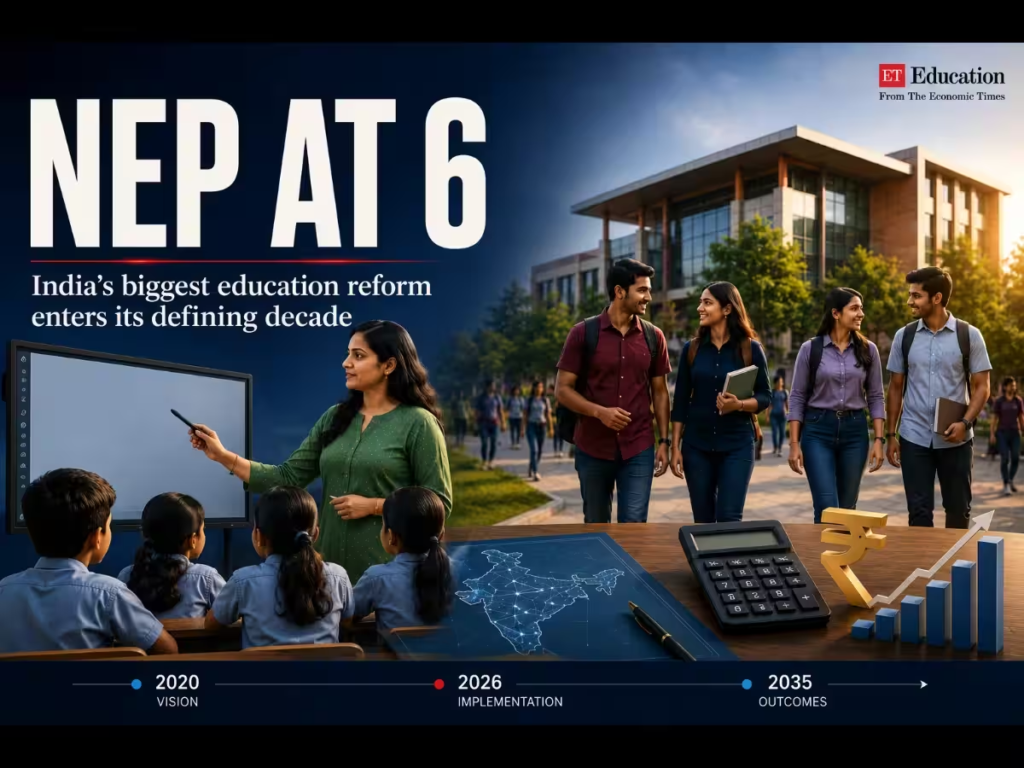
Six Years of NEP 2020: Progress and Challenges
Six years after the introduction of the National Education Policy (NEP) 2020, India’s education system has witnessed significant structural reforms across school and higher education. From curriculum changes and multidisciplinary learning to digital education initiatives, the policy has reshaped the country’s educational landscape. However, experts believe that the next phase will determine whether these reforms lead to measurable improvements in learning outcomes and educational quality.
Major Reforms Introduced Under NEP
Since its launch, NEP 2020 has led to several important changes. Many institutions have adopted the 5+3+3+4 school structure, competency-based learning, flexible undergraduate programmes, the Academic Bank of Credits, and greater emphasis on skill development and vocational education. Digital platforms such as DIKSHA and SWAYAM have also expanded access to learning resources for students and teachers.
These initiatives are intended to make education more flexible, multidisciplinary, and aligned with the needs of a rapidly changing economy.
Implementation Remains Uneven
Despite policy progress, implementation continues to vary across states and institutions. Education is a shared responsibility of the Centre and state governments, resulting in differences in infrastructure, teacher recruitment, curriculum adoption, and administrative readiness.
Experts note that while regulatory reforms have advanced relatively quickly, improvements in classroom teaching, foundational literacy, teacher availability, and school infrastructure require sustained investment and coordination.
Focus Shifts to Learning Outcomes
Education specialists argue that the next phase of NEP should focus on improving actual student learning rather than introducing new policy announcements. Strengthening teacher training, reducing learning gaps, improving assessment methods, and ensuring equitable access to quality education are expected to remain key priorities.
The successful implementation of reforms will depend on consistent monitoring, adequate funding, and cooperation between governments, educational institutions, and teachers.
Technology and Skills Gain Importance
NEP 2020 has placed increasing emphasis on digital education, research, innovation, and employability. Schools and universities are gradually integrating technology into teaching while encouraging interdisciplinary education and industry collaboration.
As artificial intelligence, digital skills, and emerging technologies become more important in the workforce, institutions are expected to further strengthen skill-based education and research opportunities for students.
Looking Ahead
The next six years are expected to be crucial for the success of NEP 2020. While many policy reforms have already been introduced, their long-term impact will depend on effective implementation, stronger institutions, well-trained teachers, and measurable improvements in student outcomes.
Education experts believe that achieving the policy’s vision will require continued collaboration between governments, schools, universities, and other stakeholders to ensure that reforms translate into meaningful changes in classrooms across the country.