
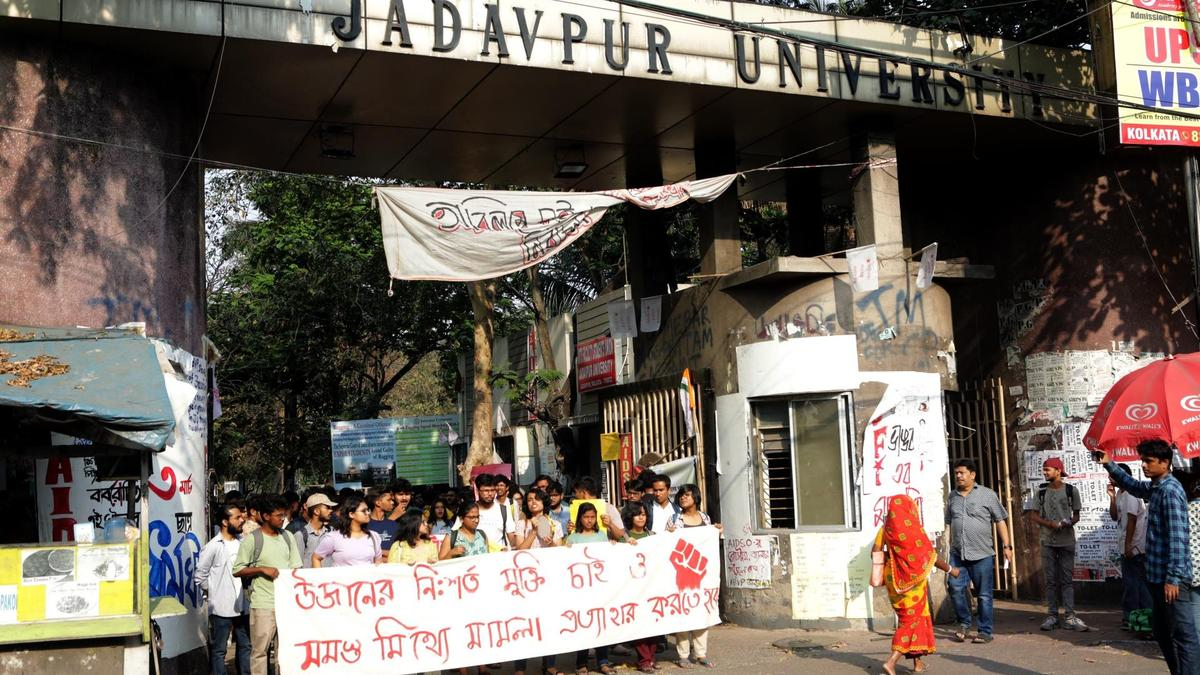
The West Bengal Assembly has passed the West Bengal Universities and Colleges (Administration and Regulation) Amendment Bill, 2026, paving the way for the transfer of teaching and non-teaching employees between state-run universities.
The legislation, passed during a special session on September 10, introduces a new provision under Section 14A of the existing 2017 Act. The state government says the move will help redistribute experienced academic and administrative staff and strengthen newer universities across West Bengal.
What Does the New Bill Allow?
Under the amended provision, the Chancellor, in consultation with the state government, can transfer an employee from one state university to another for administrative reasons. The transferred employee would be treated as an employee of the university to which they are moved, subject to the conditions specified in the transfer order.
The legislation covers both teaching and non-teaching employees. It represents a significant change from the existing system, where transfer provisions were more commonly applicable to government college teachers rather than university faculty.
The Bill also provides for the continuation of seniority in service. The state government is expected to bear expenses associated with the transfer, according to reports on the legislation.
Government Says Move Will Strengthen New Universities
The West Bengal government has defended the legislation as a measure to address disparities in academic resources among state universities.
Chief Minister Suvendu Adhikari said experienced professors could be moved to newer institutions, including universities in places such as Jhargram and Cooch Behar, where their expertise could help develop infrastructure, improve academic practices and strengthen institutions.
The government has argued that the redistribution of experienced faculty could help newer universities develop into stronger academic institutions and centres of excellence.
Teachers’ Associations Raise Concerns
The legislation has faced opposition from several teachers’ organisations and academics, who have raised concerns about university autonomy and job security.
The Jadavpur University Teachers’ Association (JUTA) has described the measure as an intervention in university autonomy and questioned the possibility of employees being moved under a new set of service conditions. The Calcutta University Teachers’ Association (CUTA) has also called for detailed consultations with stakeholders before implementing such a mechanism.
Critics have also questioned how the new transfer system would interact with university-specific statutes, existing service conditions and academic responsibilities such as research projects and PhD supervision.
Why the Bill Matters for Higher Education
Inter-university transfers could potentially help address faculty shortages and uneven distribution of experienced teachers across state universities. Newer institutions may benefit from faculty members with established teaching and research experience.
However, the implementation of the policy will be closely watched by university employees because individual institutions operate under different statutes and administrative frameworks. The extent to which transfers are used, and the safeguards provided to employees, could determine the policy’s impact on university administration.
Bill Sparks Debate Over University Autonomy
The legislation has also become part of a wider debate over the relationship between state governments and universities.
Supporters argue that governments need mechanisms to ensure that public universities have adequate academic and administrative resources. Teachers’ associations, however, maintain that excessive government intervention could weaken institutional autonomy.
The debate is particularly significant for West Bengal’s higher-education sector, where universities have historically operated under institution-specific laws and governance structures.
What Happens Next?
With the Assembly having passed the amendment, the legislation will proceed through the required approval process before becoming operational law. Its implementation will determine how frequently inter-university transfers are ordered and how service conditions, seniority, research responsibilities and other academic considerations are handled.
The new framework could provide West Bengal with a mechanism to move academic expertise towards universities that need it, but its success will depend on transparent implementation and addressing concerns raised by the teaching community.