
Delhi-NCR schools have reopened for students up to Class 5 after the suspension of GRAP-3 restrictions, but classrooms have not brought the relief many parents hoped for. With the city’s air quality still stuck between the “poor” and “very poor” categories, families say they are struggling to balance academic needs with concerns over safety, health and routine.
Offline classes resumed this week after the Commission for Air Quality Management (CAQM) noted a slight improvement in the Air Quality Index (AQI). Yet, the lived experience of parents, students and teachers paints a more complicated picture. For them, the reopening has restored structure—but not comfort.
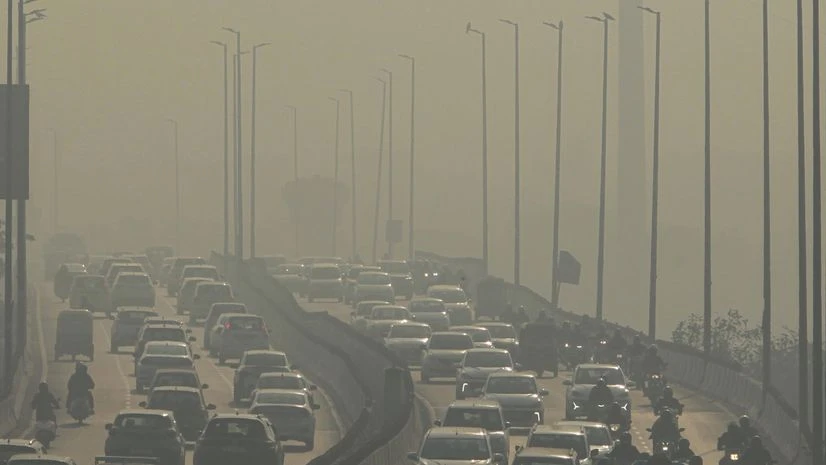
‘Routine is back, but the air still feels toxic in Delhi’
For many parents, the reopened schools mark a much-needed return to normal schedules. But stepping out each morning feels uneasy.
Mamta Agrawal, a Noida parent, said her worry has only grown. “The AQI may have improved on paper, but the air still smells toxic. My son starts coughing the moment he steps out. I’m not fully convinced schools should have reopened so quickly,” she said.
Her sentiment is shared across Delhi-NCR, where visible smog, irritation in the eyes and throats, and persistent coughing among younger children remain common. Parents say that while official numbers show slight improvement, everyday reality makes them question whether the timing was right.
Parents torn between learning and health in Delhi
Some families, however, welcomed the reopening because prolonged online classes had been affecting their child’s academic discipline.
Yogendra Yadav, a parent from East Delhi, expressed the frustration many have felt for months. “Children can’t keep shifting between online and offline. Every time this happens, my daughter’s focus breaks,” he said.
This academic concern intensifies during the winter months, when schools often toggle between formats depending on air quality. With unit tests, half-yearly exams and pre-boards for senior students already underway, parents fear that hybrid schedules may harm learning outcomes.
Vikas Sharma, president of a parents’ association in northwest Delhi, believes the academic pressure is real. “Students have tests and pre-boards. Coursework needs to be completed. It is difficult, but there is no alternative,” he said.
Teachers struggle with ventilation and mixed-mode teaching
Inside classrooms, teachers say the challenges are layered. While some private schools have installed air purifiers, many lack sufficient infrastructure to keep indoor air clean for several hours. In government and budget schools, the situation is tougher.
Sumit Sharma, a government school teacher from North Delhi, said younger students struggle most. “Small children forget masks or are uncomfortable wearing them for long periods. Not all classrooms have purifiers. We worry about prolonged exposure,” he said.
Another teacher said that switching between online and offline modes is exhausting. “When schools reopen but some children still join remotely, teachers must split attention. Managing both formats slows down teaching and makes it difficult to ensure each child is learning,” she explained.
Teachers say clear, uniform guidelines would help reduce confusion and stress for both staff and students.
Working parents say offline classes are necessary
For working parents, online classes are not always feasible.
Ginni Bhandari, a Delhi-based mother, said, “I was sending my daughter to school because handling my job and online classes together was impossible. Teachers try their best, but online classes cannot replace physical classrooms.”
She added that while decisions around reopening matter, the real solution lies in tackling the root of the pollution itself. “Along with the government, citizens must also rethink activities that worsen pollution,” she said.
Understanding the GRAP-3 rollback
The current situation emerged after the following sequence:
- GRAP-3 restrictions were imposed on November 11 after AQI entered the “severe” zone.
- Classes for students up to Class 5 went fully online or hybrid.
- The restrictions were lifted on November 26 once AQI improved slightly from “severe” to “very poor.”
- Following this, the Directorate of Education allowed schools to resume complete offline operations from November 27, aligning with the start of the new school week on December 1.
The sudden shift back to physical classes, however, left many families adjusting at short notice.
Parents’ associations urge caution, not closure
The Delhi Parents Association (DPA) said it supports reopening—mainly because exams are approaching—but emphasised caution.
Aprajita Gautam, president of the DPA, said, “Reopening was necessary, but fluctuating AQI levels remain a major concern. Parents want assurance that schools are prepared.”
She added that while schools have implemented measures like mask advisories and restricted outdoor activities, these must be monitored closely. “Implementation is key. Authorities must ensure consistency,” she said.
The DPA also highlighted the psychological impact of frequent disruptions. “Children need stability. The constant switching between online and offline formats affects their mental well-being,” Gautam added.
Health experts warn of long-term impacts
Doctors continue to caution against prolonged exposure to toxic air, especially for young children. Their smaller lungs, faster breathing rates and developing immune systems make them more vulnerable to pollutants.
Repeated exposure can lead to:
- Increased respiratory infections
- Aggravated asthma
- Eye and throat irritation
- Reduced lung function
- Long-term breathing disorders
Paediatricians in Delhi say they have already seen an uptick in cases of coughing, wheezing and allergic reactions in recent weeks.
Conclusion: Reopened schools, unresolved worries
Delhi’s schools may have resumed offline classes, but the debate around children’s safety is far from settled. Parents say they want a stable academic routine for their children but feel forced to choose between learning and health every winter.
As pollution levels are expected to fluctuate further in the coming weeks, families hope for clearer communication, stronger safety measures and long-term solutions—so that reopening schools does not come with a sense of hesitation each winter.
Also Read: https://www.indiatoday.in/education-today/notification/story/when-will-the-cat-2025-answer-key-and-response-sheet-be-released-2830485-2025-12-04
https://thenewstudent.com/breaking-the-stigma-addressing-misconceptions-about-menstruation/