
environmental awareness
A growing gap between academic learning and environmental awareness is raising concerns about students’ future readiness
Introduction: A Growing Concern in Modern Education
In today’s rapidly changing world, education is expected to prepare students not just for exams, but for real-life challenges. However, a serious but often unnoticed issue is emerging within the system. While students are performing well in traditional subjects, studies indicate that many lack basic ecological literacy, which means understanding environmental issues and their impact. According to a UNESCO global education report, nearly 70% of young people have limited awareness about climate change and sustainability concepts. Experts suggest that this “silent skill gap” could affect how future generations respond to environmental crises.
The Disconnect Between Learning and Reality
One of the main reasons behind this gap is the current structure of education. Most schools still focus heavily on rote learning and theoretical knowledge, with less importance given to practical understanding. Environmental education is often treated as a small subject rather than a life skill.
In India, data from NCERT suggests that although environmental studies are introduced at the primary level, students’ practical knowledge remains limited. Many students can define terms like pollution or global warming, but struggle to apply this knowledge in real-life situations. This shows a clear disconnect between classroom learning and real-world application
Why Environmental Awareness is Now Essential
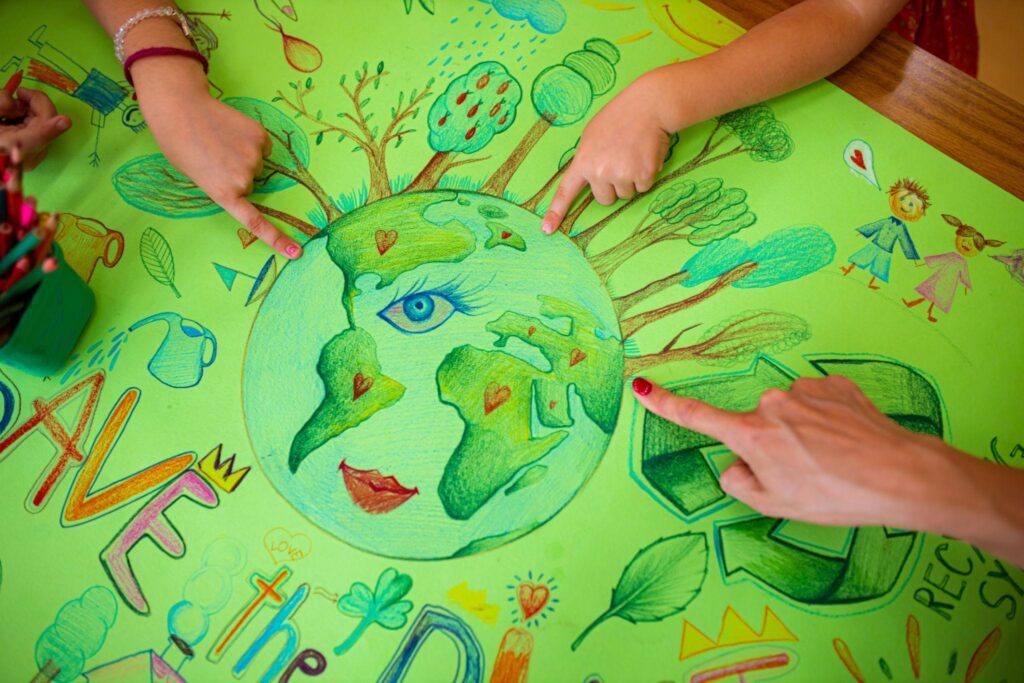
Environmental awareness is no longer optional—it is a necessary skill for survival in the modern world. With increasing problems like climate change, water scarcity, and pollution, students need to be aware and responsible.
According to the Intergovernmental Panel on Climate Change (IPCC), global temperatures are likely to rise by 1.5°C between 2030 and 2050 if current trends continue. This will directly impact future generations. Students who develop ecological understanding are better equipped to make informed decisions, whether in daily life or future careers. They also become more responsible citizens who can contribute to sustainable development.
Impact on Student Development
The lack of environmental education does not only affect knowledge, but also overall student development. Students may perform well academically but often lack skills like critical thinking, problem-solving, and decision-making.
Experts believe that when students are exposed to environmental learning through activities such as field visits, projects, and real-life case studies, they show better understanding and engagement. This type of learning helps in building confidence and awareness. On the other hand, a purely theory-based approach limits their ability to think independently and act responsibly.
Challenges Within the Education System
There are several challenges that prevent proper environmental education. These include:
- outdated curriculum
- lack of practical learning methods
- limited teacher training
A report by UNICEF India highlights that many schools do not have enough resources to conduct environmental activities or awareness programs. As a result, students miss opportunities to learn through experience. The system still focuses more on exams than on skill development.
The Way Forward: Bringing Change in Education
To bridge this silent skill gap, education systems need to adopt a new approach. Environmental awareness should be integrated into all subjects, not just taught separately. Schools should promote activity-based learning, where students can understand concepts through real-life experiences.
Teachers also need proper training to guide students effectively. Government policies should support this change by making environmental education a core part of the curriculum. Small steps, such as school projects on sustainability or community-based learning, can make a big difference.
Conclusion: Preparing Students for the Future
The silent skill gap is a serious issue that cannot be ignored. If students are not prepared to understand and deal with environmental challenges, the future may become more difficult for them.
Reimagining education with a focus on environmental awareness is not just important—it is necessary. Only then can we ensure that future generations are ready to build a more sustainable and responsible world.