
The January 23 morning shift of JEE Main 2026 concluded on a largely steady note, with students and experts describing the paper as balanced, syllabus-aligned, and fair for well-prepared candidates. While no section delivered major shocks or out-of-syllabus surprises, the paper still demanded conceptual clarity, time management, and calm execution—hallmarks of the JEE Main examination.
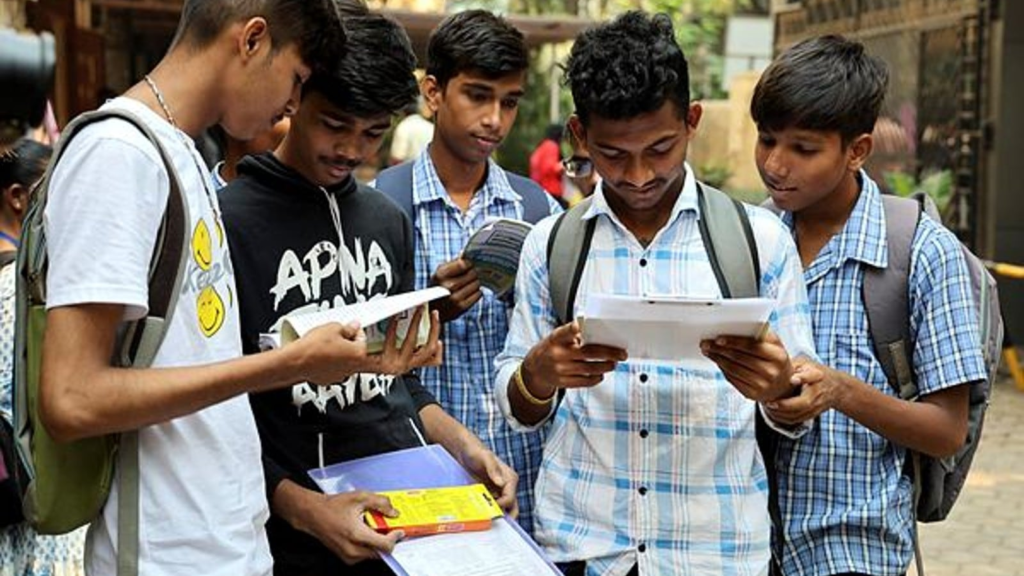
Overall, the exam reinforced a familiar trend seen in recent years: depth of understanding mattered more than rote learning, and candidates who had practised across the full syllabus were at a clear advantage.
Overall difficulty level: Balanced but not easy
Based on feedback from students across multiple centres and preliminary expert reviews, the overall difficulty level of the JEE Main January 23 paper ranged from moderate to moderately difficult. The consensus ranking of sections by difficulty was:
Mathematics > Physics > Chemistry
This hierarchy played out consistently in student reactions, with many reporting that while Chemistry felt manageable and Physics was straightforward for the prepared, Mathematics emerged as the most time-consuming section.
Importantly, experts noted that the paper did not rely on “trick questions” or excessive calculation traps. Instead, it tested how well candidates could apply standard concepts under time pressure.
Mathematics: Lengthy and time-intensive
Mathematics was widely regarded as the most challenging section, primarily due to its length rather than conceptual novelty. Students reported that while most questions were based on familiar topics, they required multi-step reasoning and careful calculations.
Key observations from the JEE Main Maths section:
- Strong presence of Algebra and Calculus
- Questions from Coordinate Geometry and Vectors were doable but time-consuming
- Few direct formula-based questions; most required logical progression
- Managing time was the biggest challenge
Many students felt that attempting all questions was difficult within the allotted time, making question selection strategy crucial. Those who tried to solve everything sequentially often struggled to complete the section.
Experts advised that this section rewarded candidates who:
- Identified high-confidence questions early
- Avoided over-investing time in a single problem
- Maintained accuracy over speed
Physics: Conceptual and well-structured
Physics was largely seen as moderate in difficulty and well-balanced, with a healthy mix of conceptual and numerical questions. Students who had a strong grip on NCERT fundamentals and standard JEE-level problems found the section approachable.
Highlights from Physics JEE Main:
- Mechanics and Current Electricity featured prominently
- Conceptual clarity mattered more than lengthy calculations
- Questions were direct, with no ambiguous framing
- Numerical values were reasonable, avoiding calculation overload
Several students noted that Physics helped restore confidence after Mathematics, allowing them to stabilise their overall attempt.
Experts described the section as “fair but discriminating,” meaning it could differentiate between surface-level preparation and deeper understanding without being intimidating.
Chemistry: NCERT-focused and scoring
Chemistry in JEE Main emerged as the most scoring section, especially for candidates who had thoroughly covered NCERT textbooks. The section was largely predictable in structure and did not include unexpected twists.
Section-wise feedback indicated:
- Inorganic Chemistry was highly NCERT-based
- Organic Chemistry tested reaction mechanisms and conceptual understanding
- Physical Chemistry involved standard numerical problems
Students reported that Chemistry required less time compared to Mathematics and Physics, allowing them to compensate for time lost elsewhere.
Experts reiterated a familiar JEE insight: Chemistry continues to reward disciplined NCERT reading, especially in Inorganic and Organic sections.
Syllabus coverage: Broad and balanced
One of the most notable aspects of the January 23 paper was its wide syllabus coverage. Instead of concentrating heavily on a few chapters, the paper sampled questions across multiple topics.
This approach benefited students who:
- Avoided selective studying
- Revised all chapters at least once
- Practised mixed-topic mock tests
Conversely, candidates who relied on “important chapters only” strategies found fewer comfort zones in the paper.
Student reactions: Relief, realism, and reflection
Initial student reactions reflected a mix of relief and realism. Many expressed satisfaction that the paper did not include surprises, while acknowledging that time pressure—especially in Mathematics—was real.
Common student sentiments included:
- “No shocks, but not easy either”
- “Maths was lengthy; had to leave questions”
- “Chemistry saved the paper”
- “Physics felt like mock-test level”
For many aspirants, the paper reinforced the importance of steady preparation over last-minute tactics.
Expert views: A paper that rewards consistency
Education experts analysing the paper described it as well-designed and in line with NTA’s recent testing philosophy. According to them, the paper aimed to assess:
- Conceptual clarity
- Application skills
- Exam temperament
Experts also noted that the paper avoided extremes—neither overly difficult nor overly simplistic—making it suitable for fair ranking across a large candidate pool.
From a competitive standpoint, this suggests that cut-offs may remain stable, with strong emphasis on accuracy rather than aggressive guessing.
What this means for upcoming shifts
For students appearing in later JEE Main 2026 shifts, the January 23 analysis offers key takeaways:
- Do not underestimate Mathematics time management
- Revise NCERT thoroughly for Chemistry
- Focus on conceptual clarity in Physics
- Practise full-length mock tests under timed conditions
If this paper sets the tone for subsequent shifts, candidates should expect balanced papers that reward holistic preparation rather than shortcuts.
Final takeaway
The JEE Main 2026 January 23 paper reaffirmed a familiar truth for aspirants: there are no substitutes for consistency, conceptual understanding, and calm execution. While Mathematics tested patience, Physics rewarded clarity, and Chemistry offered scoring opportunities, the exam overall remained fair and predictable for those who prepared diligently.
As the JEE Main season continues, this paper stands as a reminder that success lies not in surprises—but in preparation done right.
Also Read: https://educationpost.in/news/education/panjab-university-delays-exams-as-student-protest-over-senate-polls-intensifies
https://thenewstudent.com/national-task-force-student-wellbeing/