
The cultural heart of Kerala came alive on 14 January 2026 as Thrissur hosted the inauguration of the 64th Kerala School Kalolsavam, widely regarded as Asia’s largest school-level arts festival. Organised by the Kerala Department of General Education, the week-long event brings together thousands of school students from across the state, transforming the city into a vibrant celebration of creativity, talent, and cultural diversity.
Known as Kerala’s cultural capital, Thrissur provides a fitting stage for a festival that has, for decades, symbolised the state’s deep-rooted commitment to arts education. With participation spanning government, aided, and private schools, the Kalolsavam stands as a powerful reflection of inclusivity and collective cultural pride.
A Celebration of Artistic Diversity
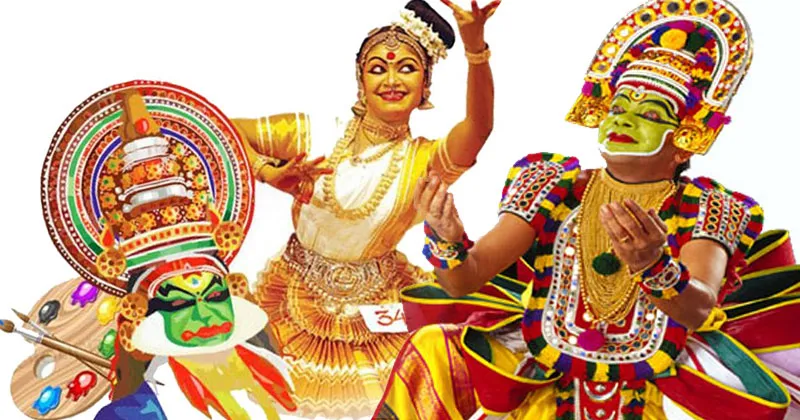
The festival features hundreds of competitive and non-competitive events covering an expansive range of artistic disciplines. Students compete in classical and folk dance forms, vocal and instrumental music, theatre, mime, and mono-act performances, as well as painting, sculpture, poetry recitation, creative writing, and debates.
Events are thoughtfully categorised for lower primary, upper primary, high school, and higher secondary students, ensuring age-appropriate participation and encouraging young learners to engage with the arts from an early stage. This structured inclusivity allows students to grow artistically as they progress through the education system.
From classical expressions rooted in tradition to contemporary performances reflecting modern themes, the Kalolsavam creates a space where heritage and innovation coexist seamlessly.
Arts as an Integral Part of Education
Kerala School Kalolsavam is more than a cultural competition—it is an educational philosophy in action. The festival reinforces the idea that arts and creativity are central to holistic learning, not extracurricular add-ons.
Through months of preparation, students develop discipline, time management, teamwork, and self-confidence. Performing before large audiences and expert juries helps nurture communication skills and emotional resilience, qualities that extend far beyond the stage.
Educators have long viewed the Kalolsavam as a platform that complements classroom learning, enabling students to explore identity, expression, and critical thinking through creative mediums.
Preserving Cultural Heritage
One of the most significant contributions of the Kalolsavam lies in its role in preserving Kerala’s intangible cultural heritage. Folk traditions, regional art forms, and classical disciplines are kept alive as each generation of students learns, performs, and reinterprets them.
In an era of rapid globalisation, the festival ensures that local traditions remain relevant and respected. By adapting traditional art forms to contemporary contexts, students contribute to the living evolution of Kerala’s cultural legacy.
This approach aligns closely with global cultural priorities that emphasise safeguarding intangible heritage through education and community participation.
A Launchpad for Future Artists
Over the years, the Kerala School Kalolsavam has earned a reputation as a launchpad for artistic excellence. Numerous performers who first gained recognition on its stages have gone on to achieve national and international acclaim in music, dance, cinema, literature, and theatre.
The festival’s competitive structure, judged by experienced professionals, provides young artists with early exposure to high standards of performance and constructive feedback. For many students, this experience becomes a defining moment, shaping career paths and lifelong engagement with the arts.
Promoting Social Inclusion
A defining strength of the Kalolsavam is its emphasis on social inclusion and equal opportunity. Students from rural, tribal, and marginalised communities participate alongside their urban peers, united by talent and effort rather than socio-economic background.
By providing a common platform, the festival fosters mutual respect, cultural exchange, and social cohesion. It also helps identify and nurture talent that might otherwise remain undiscovered due to limited access to private training or exposure.
A Model for Cultural Education
Kerala School Kalolsavam is often cited as a best-practice model for integrating culture into formal education. Its scale, organisation, and educational impact demonstrate how arts education can be institutionalised within school systems without compromising academic priorities.
Other states frequently look to Kerala’s Kalolsavam framework when designing cultural initiatives, recognising its ability to balance competition with collaboration, tradition with innovation, and excellence with inclusivity.
Looking Ahead
As the 2026 edition unfolds across venues in Thrissur, the festival once again underscores Kerala’s leadership in cultural education. Beyond trophies and rankings, the true success of the Kalolsavam lies in the confidence it builds, the heritage it preserves, and the creative spirit it ignites among young learners.
In bringing together education, culture, and youth engagement, Kerala School Kalolsavam 2026 stands as a powerful reminder that nurturing creativity is essential to shaping well-rounded, empathetic, and culturally grounded citizens.
Also Read: https://thenewstudent.com/national-task-force-student-wellbeing/
https://educationpost.in/news/education/panjab-university-delays-exams-as-student-protest-over-senate-polls-intensifies