
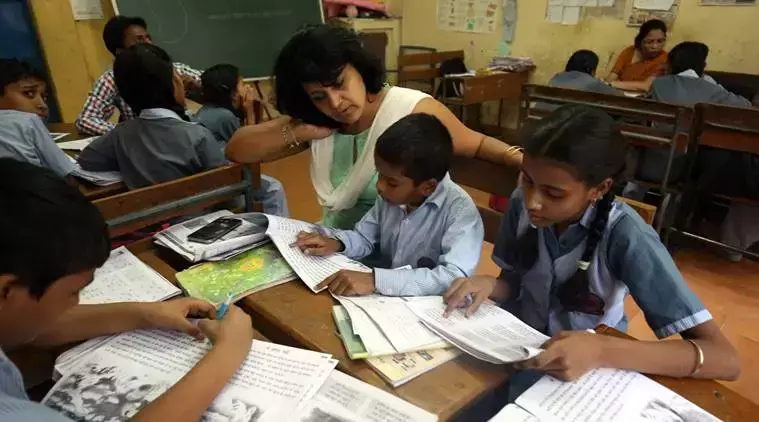
Telangana’s school education system is facing a serious learning-outcome challenge, with some students spending several years in school yet struggling to read and understand textbooks meant for much younger children. The situation has highlighted a widening gap between school attendance and actual learning, particularly in foundational literacy.
The concern comes at a time when Telangana’s overall literacy rate remains below the national average. According to recent figures, the state’s literacy rate stood at 74.6% in 2025, compared with the national average of 80.9%.
Students Struggle With Basic Reading Skills
The literacy problem goes beyond whether children are enrolled in schools. Reports from Telangana indicate that some students who have already spent around five years in the formal education system continue to face difficulty reading text at the Class 2 level.
Such learning gaps raise questions about whether students are acquiring foundational reading skills during the early years of schooling. The ability to read and comprehend age-appropriate text is considered a basic building block for learning subjects such as mathematics, science and social studies.
School Attendance Does Not Always Mean Learning
The Telangana situation reflects a broader challenge facing school education in India: ensuring that children do not merely attend school but also acquire essential competencies.
National-level assessments have repeatedly pointed to gaps in foundational learning. The 2024 ASER findings, for instance, reported that about half of Class 5 students nationally were unable to read a Class 2-level text.
This distinction between enrolment and learning is important because children who fall behind in the early grades can find it increasingly difficult to keep up as the curriculum becomes more complex.
Telangana’s Literacy Rate Raises Further Concern
The state’s literacy figures add another dimension to the issue. Telangana recorded a literacy rate of 74.6% in 2025, down from 76.9% in 2023-24, according to figures reported by The Times of India. The state’s latest rate is also below India’s 80.9% national average.
The figures underline the need to focus not only on expanding access to education but also on the quality and effectiveness of classroom learning.
Foundational Literacy Remains a Key Education Priority
Foundational literacy and numeracy have become a major focus of India’s school education reforms. The NIPUN Bharat initiative aims to ensure that children achieve foundational literacy and numeracy by the end of Grade 3.
The objective is based on the understanding that children who do not develop basic reading, writing and numeracy skills in the early grades are more likely to struggle throughout their academic journey.
For Telangana, the reported learning gaps indicate the importance of identifying students who are falling behind at an early stage and providing targeted academic support rather than allowing the gap to widen as they move into higher classes.
Learning Gaps Need Early Intervention
The challenge is not simply about improving literacy statistics. Students who reach middle and secondary school without basic reading proficiency face difficulties across the curriculum and may become increasingly disengaged from education.
Schools therefore need mechanisms to regularly assess children’s reading abilities, identify learning gaps and provide remedial instruction. Teacher support, age-appropriate learning material and individual attention can play an important role in helping students catch up.
Telangana’s Education System Faces a Quality Challenge
The literacy concerns point to a larger question about the effectiveness of schooling: whether years spent inside classrooms are translating into measurable learning.
Improving enrolment and keeping children in school remain important goals, but they must be accompanied by strong foundational learning outcomes. For Telangana, addressing the gap between years of schooling and actual reading ability will be crucial to improving the state’s overall education indicators.
The latest concerns serve as a reminder that being in school and being able to learn are not necessarily the same thing. Strengthening foundational literacy at the primary level could therefore be central to improving Telangana’s long-term educational outcomes.