
Sustainable
This article examines how Indian cities are evolving from infrastructure-centric hubs into sustainable urban ecosystems. It underscores the urgent need for a renewed citizen–state partnership to transform rapid urban growth into lasting livability and stronger climate resilience.
India’s Urban Transformation: From Infrastructure Expansion to Sustainable and Inclusive City Development
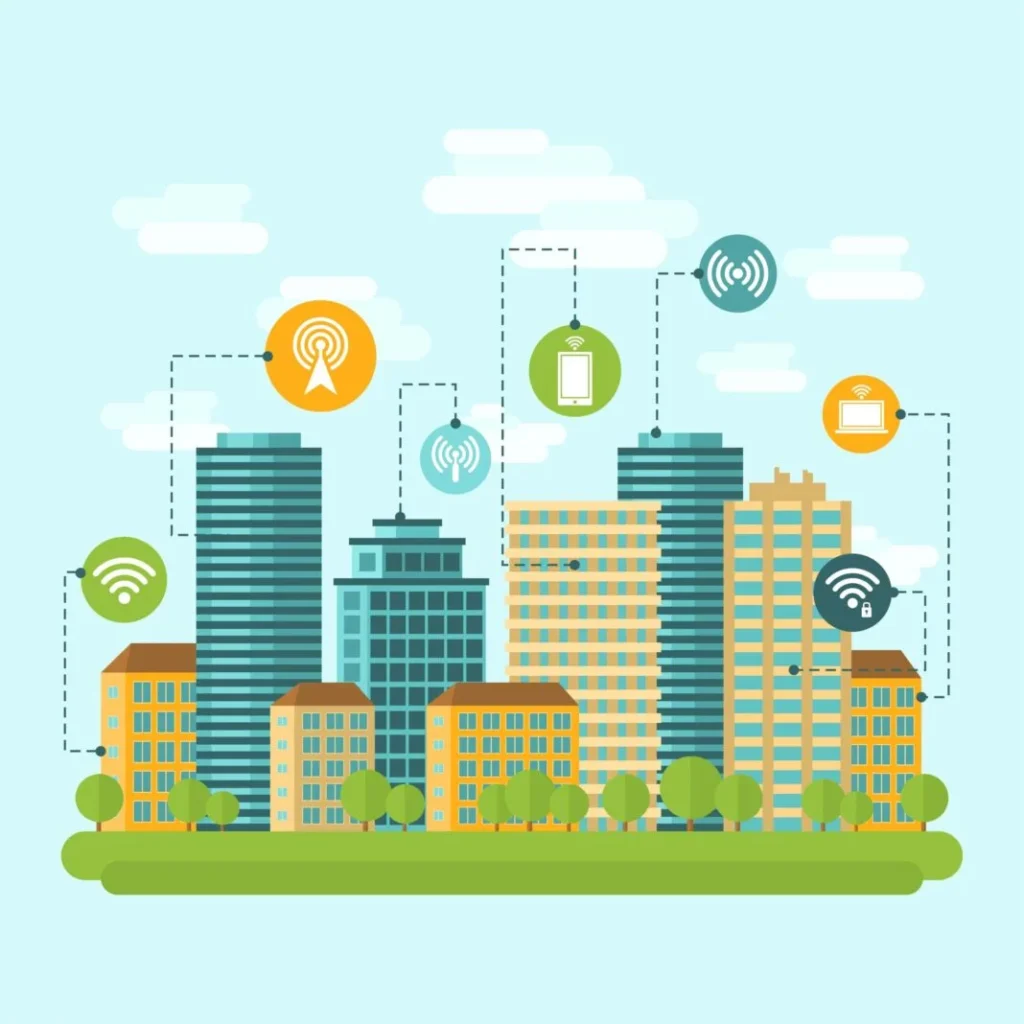
India’s ongoing urban transition is increasingly being viewed not merely as an infrastructure challenge, but as a deeper civic and governance deficit. This concern has been underlined by the latest Economic Survey, which points to a weak citizen–state compact as a central constraint in achieving sustainable urbanization. With India’s population projected to reach 1.7 billion by 2047—and nearly 51% expected to reside in urban areas—cities are poised to contribute close to 70% of the national GDP. While this urban expansion promises economic dynamism, it also intensifies pressures on sustainability and livability. Persistent challenges such as unplanned urbanisation, inefficient waste management, and recurring urban flooding highlight structural gaps that extend beyond financial limitations. Experts argue that addressing these challenges requires not only increased investment but also a renewed focus on participatory governance, accountability, and behavioral change.
Despite these constraints, Indian cities have made notable strides toward sustainable and inclusive development across multiple sectors. In the domain of environmental sustainability, the transition to electric mobility is gaining significant momentum. Initiatives such as PM-eBus Sewa aim to deploy 10,000 electric buses across 169 cities, contributing to reduced greenhouse gas emissions and improved urban air quality. Complementing this, the RMI-NITI EV Report outlines an ambitious target of achieving 70% EV penetration in commercial vehicles by 2030, making green mobility more accessible to lower-income populations dependent on public transport.
Urban housing has also witnessed transformative efforts aimed at social inclusivity. Under PMAY-U 2.0, the recent approval of 2.87 lakh additional houses has taken the total sanctioned homes to over 13.61 lakh. Notably, 96% of these houses are registered in the name of women or under joint ownership, reflecting a strong emphasis on gender empowerment and economic security. This initiative is helping integrate marginalized communities into the formal urban framework.
In the area of sanitation and waste management, India is shifting from a linear disposal model to a circular waste economy. Swachh Bharat Mission-Urban 2.0 is actively working toward making cities garbage-free, including the clearance of massive legacy dumpsites such as Ghazipur in Delhi. As a result, urban solid waste processing capacity has exceeded 80.31% by late 2025. Parallelly, decentralized solar energy initiatives like PM Surya Ghar: Muft Bijli Yojana aim to provide rooftop solar power to one crore households by 2027, offering up to 300 units of free electricity per month while reducing carbon emissions significantly.
Economic inclusivity is being strengthened through schemes like PM SVANidhi, which has disbursed over 96 lakh loans worth ₹13,797 crore to more than 68 lakh street vendors as of July 2025. This initiative has brought informal workers into the formal financial ecosystem, reducing dependence on exploitative lending practices.
Technological innovation is also reshaping urban governance. Under the Smart Cities Mission, 100 Integrated Command and Control Centres (ICCCs) have been operationalized, functioning as centralized hubs for real-time data integration across traffic, water, and surveillance systems. Cities like Chandigarh have reported significant improvements in enforcement through such systems. Meanwhile, water security initiatives under AMRUT 2.0, backed by an outlay of ₹2.77 lakh crore, aim to provide universal tap water supply across 4,378 towns, while Mission Amrit Sarovar focuses on rejuvenating water bodies nationwide.
India’s mass transit infrastructure has expanded rapidly, with metro networks growing from 248 km in 2014 to over 1,013 km across 23 cities by May 2025. The Delhi–Meerut RRTS corridor, for instance, recorded over one lakh passengers in a single day in February 2026, reflecting increasing reliance on sustainable transit systems.
However, several structural challenges continue to hinder effective urban transformation. Municipal bodies remain financially constrained, with revenues accounting for just 1% of GDP, far below global benchmarks. Property tax collections also remain under-realized at around 0.15–0.20% of GDP. Additionally, fragmented governance structures—such as those seen in Bengaluru and Mumbai—create coordination challenges due to overlapping institutional responsibilities.
Unregulated peri-urban expansion further complicates urban planning, with non-agricultural land increasing significantly between 1991 and 2022, often at the cost of agricultural land and ecological buffers. Climate vulnerability is another pressing issue, with over 57% of districts facing high to very high heat risk, and large-scale encroachments on wetlands exacerbating flood risks.
Housing informality remains widespread, with an estimated 65 million people living in slums, while urban mobility continues to favor private vehicles, which account for over 88% of registered vehicles. Water mismanagement and waste processing inefficiencies further add to the sustainability burden, as cities struggle with groundwater depletion and inadequate waste treatment infrastructure.
Notwithstanding these challenges, several cities offer replicable models of success. Surat’s ICCC demonstrates the power of data-driven governance, while Indore’s waste-to-wealth model showcases the potential of circular economies. Ahmedabad’s transit-oriented development and Odisha’s Jaga Mission highlight innovative approaches to spatial planning and social housing. Pimpri-Chinchwad’s use of green municipal bonds further underscores the importance of financial innovation.
Looking ahead, experts emphasize the need for integrated solutions such as transit-oriented development, blue-green infrastructure, decentralized waste management, and enhanced municipal fiscal autonomy. The adoption of digital twin technology and inclusive in-situ slum redevelopment can further strengthen resilience and equity in urban systems. Additionally, promoting rooftop solar micro-grids and non-motorized transport through complete street design can significantly reduce urban carbon footprints.
In conclusion, India’s path to sustainable urbanization requires a paradigm shift from infrastructure-led growth to a governance model rooted in a strong citizen–state compact. By aligning fiscal reforms with climate resilience strategies and inclusive development, India can transform its urban transition into a driver of long-term economic and environmental sustainability
Also read: India’s Climate-Health Battle: The Critical Role of AI at the Frontline
Do follow: Indian cities don’t lack infrastructure, what they lack is civic trust