
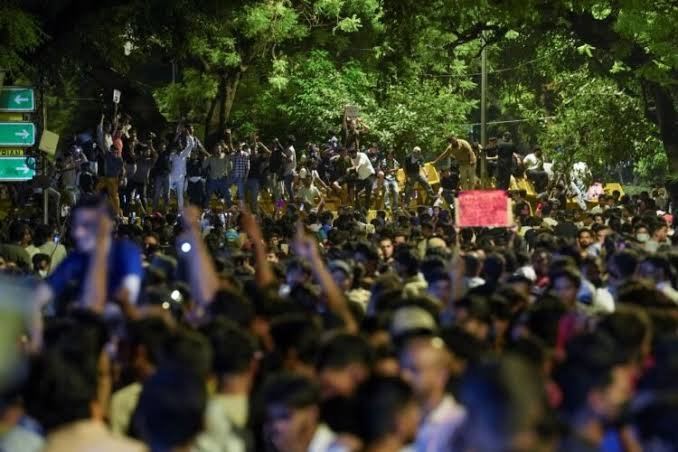
NEW DELHI — Talks were held between government representatives and the youth-led Cockroach Janta Party (CJP) at the Constitution Club of India after the Centre agreed to meet at a neutral venue. The talks followed major policy announcements aimed at addressing rampant examination irregularities, though opposition and student groups remain firm on key political demands.
Crackdown and Overhaul at NTA
As part of an institutional overhaul following widespread paper leak controversies, the National Testing Agency (NTA) terminated 47 officials. Several of the dismissed personnel are also set to face legal and criminal prosecution following internal investigations.
The Hindu+ 1
Simultaneously, the Union Cabinet approved a draft bill designed to impose harsher penalties for paper leaks and set up fast-track courts to prosecute offenders. The legislative move comes in the wake of Prime Minister Narendra Modi’s public address assuring students of swift justice and structural reforms.
The Hindu
CJP Stands Firm on Minister’s Resignation
Despite the Centre’s legislative and administrative actions, the CJP maintained that the government’s measures fall short without high-level accountability. During the meeting, party representatives reiterated that the “strictest action” must start at the top, holding their position that the resignation of Union Education Minister Dharmendra Pradhan is a non-negotiable step toward restoring trust in national competitive examinations.
Sonam Wangchuk Ends 26-Day Fast
Parallel to the talks, climate activist and reform advocate Sonam Wangchuk ended his 26-day hunger strike late Thursday night in the presence of Union Ministers. Wangchuk, who had been striking in solidarity with student protests over examination integrity, cited negotiations with officials and concerns over potential civil unrest as factors in his decision to break the fast.
The Indian Express
Probe Into Alleged Pellet Gun Use in Capital
Adding to the tension, the Central Reserve Police Force (CRPF) announced it is verifying media reports regarding the alleged use of pellet guns by the Rapid Action Force (RAF) during the July 20 protest march to Parliament. The investigation was triggered by reports indicating the deployment of anti-riot pellet cartridges against unarmed student demonstrators in the national capital, marking a significant escalation in force that has drawn sharp criticism from human rights groups and opposition leaders.
While the government attempts to de-escalate the crisis through structural reforms and dialogue, student organizations maintain that long-term trust depends on political accountability and an immediate end to harsh crowd-control tactics.
ALSO READ https://indianexpress.com/article/cities/delhi/delhi-protest-journalist-pellet-injuries-chalo-sansad-march-10801612/:‘30 pellets still inside my body’: Journalist hurt in CJP protest seeks compensation
ALSO READAIU Advises Universities to Keep Students Focused on Academics Amid CJP Protests: AIU Advises Universities to Keep Students Focused on Academics Amid CJP Protests